The jazz age, or more commonly known as the roaring 20's, was the age of material success. The American dream was to work hard and achieve material success and thus happiness. With the rise in immigration and the advent of many new technologies, everyone had a dream of success.
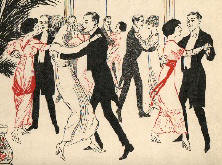
The decade between the end of the First World War in 1919 and the Great Crash on Wall Street in 1929(variously labeled as “The Jazz Age”, “The New Era” or “The Roaring Twenties”) was an exciting and contradictory period characterized by fundamental changes in the way people thought, felt and behaved as they tried to adjust to the conditions of modern life. The new manners and morals were first evidenced among the young who were in revolt against what they referred to as Puritanism, that is a morality of thrift and self-imposed repression, conformity to strict Victorian moral codes and a rigid adherence to gender roles.
Important social changes result from advances in technology. In this period cars started to be produced on a large scale. Other new inventions (telephone, washing machine, refrigerator, vacuum cleaner, commercial airplane ...) influenced the quality of life.
|
|
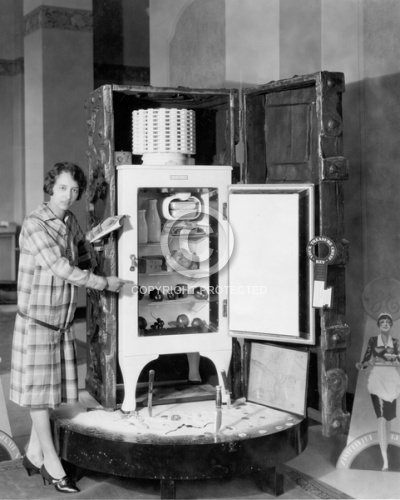
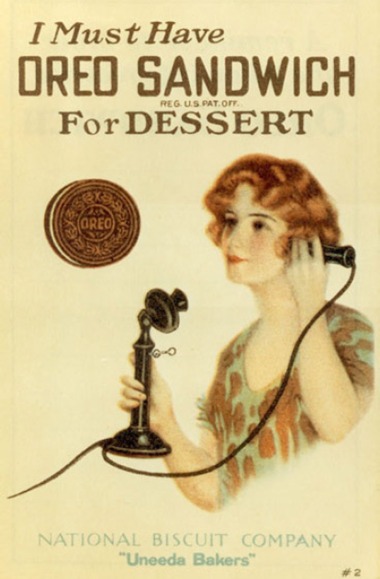
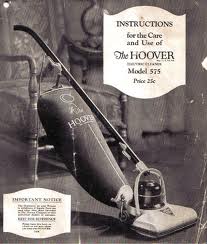
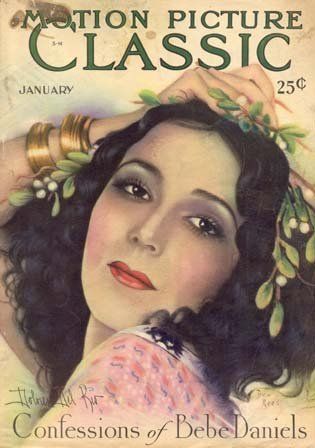
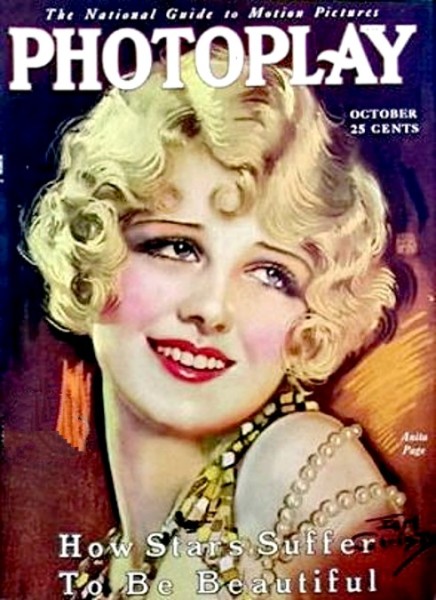
A deep transformation of society also resulted from the rise of the mass-media: the first radio station opened in PIttsburgh in 1920, the movies attracted larger audience and a growing advertising industry encouraged the development or wide-circulation magazines.
 |  |
In this age, the government encouraged economic expansion and, as a consequence of this, the American middle-class achieved the highest standard of living the world had ever known. For the poeple involved in business and finance, and land speculation, these were years of a frenetic chase after wealth and fun, while there were large sectors of America (e.g. the mining towns of the South and West, the Midwestern farmers) still struggling for a decent quality of life.
The Jazz Age also witnessed the destruction of the progressive and reform politics of the prewar period. The political climate was unfavorable toward organized labor, which between 1919 and 1922 was defeated in a series of strikes in various industries in several areas of the country. Fear of a socialist revolution like the one that had taken place in Russia motivated the “Red Scare”, a movement promoted by the government that authorized attacks on people with radical political affiliations. Equalyy reactionary was the rising tide of racism, as the white majority responded with hostility to the idea that the Blacks might finally be fully integrated into society. Between 1920 and 1925, membership in the Ku Klux Klan ( an anti-Black secret society which also aimed its violence at Catholics and Jews) rose from a few thousand to several million. At the same time, anti-immigrant sentiments in “old Americans” of northern European descent led to the approval in 1921 and 1924 of several restrictive immigration laws that brought to an end three centuries of an “open door” immigration policy.
Another negative aspect of the age was Prohibition which came into being in January 1919 when Congress approved a law forbidding the “manufacture, sale and transportation of intoxicating liquors.” During Prohibition, which lasted until 1933, the law was widely and openly ignored and America developed a new life style of illegal drinking and opened the door to organized crime in connection with bootleg liquor.
The Jazz Age came to an abrupt end in October of 1929 with the collapse of the Stock Market on Wall Street and the beginning of the Great Depression that lasted for the entire decade of the 1930s. As banks failed, businesses went bankrupt, unemployment rose, and poverty spread. The mood of the nation changed from gay cynicism to concerned pessimism and there was a renewed sense of sociopolitical responsibility and human solidarity at all levels of society.
In literature, the Jazz Age was one of the most brilliant decades of the twenties century. After the First World War ,many important writers were affected by a sense of cultural collapse and disorderwhich increased their feelings of uncertainty and disorientation. This generation of writers became increasingly alienated from American society. Many of them sailed for Europe (among them Hemingway, Dos Passos, Cummings and Fitzgerald). Most chose to live in Paris not only because it offered them an inexpensive life style but also because this city was the centre for the arts that could provide the kind of atmosphere and stimulation they needed to shape their craft. Thus, a phenomenon peculiar to the times was that much of the best American literature was written abroad. Among these writers, Fitzgerald stands out as the one who most brilliantly captured the tone and temper of the Jazz Age, even if, like all great artists, he was not entirely a part of the society he portrayed. He was fascinated with its display of wealth and success but he observed it with a certain satirical detachment. This dual vision, of the romantic and the moralist, allowed him to chronicle the malaise as well as the exuberance of the decade. For instance he was one of the first novelists to connect the rebelliousness of the young with their deep disillusionment.
