[Jazz music] Brief introduction
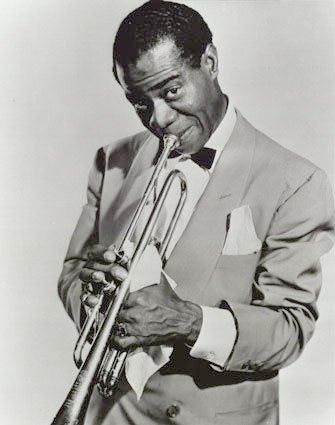 | The memory of things gone is - Louis Armstrong |
Early jazzmen said "to jazz" was to fornicate, while a "jazzbow" was considered to mean a lover of the ladies. Many literary scholars argue that the term “jazz” originated in the jargon of Chaucer and Shakespeare. While musician and songwriter Clarence Williams takes credit for the term by declaring that he was the first to ever use the word “jazz” in a song.
Referred to as “America’s classical music,” jazz is one of North America’s oldest and most celebrated musical genres.
The history of jazz can be traced back to the Unites States in the early part of the 20th century. From Ragtime and Blues to Big Band and Bebop, jazz has been a part of a proud African American tradition for over 100 years.
A strong rhythmic under-structure, blue notes, solos, “call-and response” patterns, and improvisation of melody all characterize jazz music. Throughout the history of jazz, these characteristics have worked together in establishing an inventive style and musical genius.
Louis Armstrong, Miles Davis, and Billie Holiday are examples of some of the most celebrated jazz musicians of America’s past. These and many other famed musicians throughout the history of jazz have not only inspired modern musicians, but have also instilled modern music lovers with an appreciation for musical history.
The history of jazz has its roots firmly planted in the American cities of New Orleans, Chicago, and New York City. And the musical tradition within these cities still lives on today.
[Jazz Music] The history
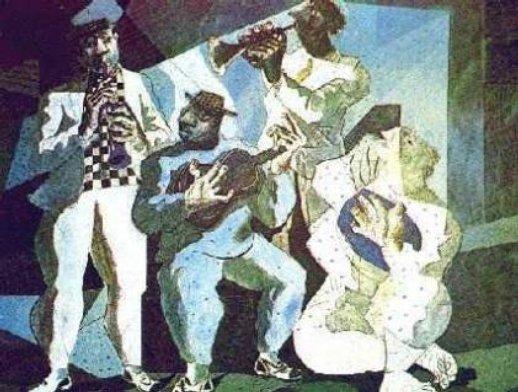 | 1700s– Music has always played an important role in African American culture. The roots of jazz can be traced back to the times of slavery where slave work songs were created in the form of “call-and-response.” To tell a story, and pass the time, a song leader would call out a line and the rest of the workers would respond to his call. Soulful songs called “spirituals” were also sung by slaves. These expressed their strong religious beliefs as well as their desire for freedom. Elements of both work songs and spirituals are a part of the foundation of jazz. |
1800s– During this era, America became known as the “land of opportunity.” Many Europeans immigrated to different American cities in search of fortune and a better life. With these immigrants came a variety of musical traditions as well, such as Irish gigs, German waltzes, and French quadrilles. The African American composer Scott Joplin combined these newly introduced European compositional styles with the rhythmic and melodic music of the black community. This became known as "ragtime." | 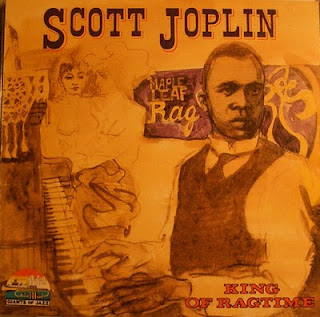 |
1900s– New Orleans played a great role in the evolution of jazz music in the 20th century. At this time, the people of New Orleans hailed from many different cultures. As new settlers arrived in New Orleans, musical traditions from all over the world began to unite. African American musicians merged European musical tradition with such music as blues, ragtime, and marching band to create a new style of music—jazz.
1920s– African Americans began migrating to northern cities like Chicago and New York in search of better opportunity. With them, they brought the sounds of jazz and blues. Young Americans began to embrace this new style of music by listening and dancing to jazz and blues. This represented a rebellion against their parent’s old-fashioned views. Young women, known as "flappers," shocked their parents by cutting their hair and wearing shorter dresses.
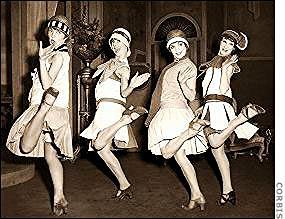 The young "Flapper" look | 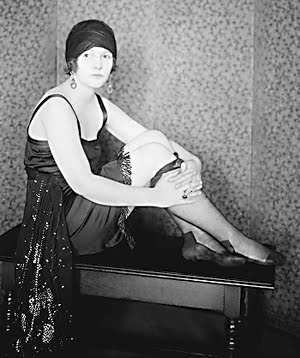 |
For the first time radios and record players were widely available in stores. This encouraged the popularity and growth of jazz music. Jazz went from being played only in New Orleans to becoming a staple of the American airwaves, dance halls, and homes.
1930s– A new style of jazz, "big band swing," emerged. This became the most popular music of the 1930s and 40s. Because of its highly energetic beat, swing music brought people to the dance floor every night.
1940s– Many jazz musicians were drafted to fight in World War II. A million African Americans served in the armed forces all because of the strict segregation that pervaded throughout the era. Because of this, bands were experiencing difficulties in finding musicians to perform in the dance halls.
1950s– Americans began to turn to television as their source of entertainment, and music began to play a less important role. As a result, dance halls began to close all across the country. Rock ‘n roll was introduced through the variety shows on television, and musicians such as Elvis Presley quickly became the sensation for American teenagers. | 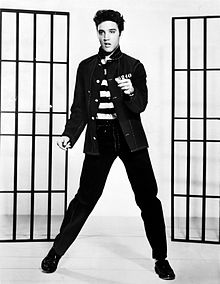 |
1960s– The civil rights movement also had an impact on jazz and the jazz music scene. African American jazz artists had long resented the white owned record companies and clubs that controlled their income. Some artists wanted to break away from these establishments and control their own music.
1970s– Present - Throughout the rest of the 20th century, jazz continued to evolve and take on new forms. The 1970’s saw the popularity of fusion; the 1980’s are known for acid jazz and its return to classic blues; the 1990’s introduced smooth jazz and retro swing.
