[Jazz music] Definition and Feature
I. The Definition of Jazz MusicJazz has the “ability to absorb and transform influences” from diverse musical styles. As a result, it’s hard to define Jazz, and many definition described by lots of musicians are still debatable. Travis Jackson has also proposed a broader definition of jazz which is able to encompass all of the radically different eras: he states that it is music that includes qualities such as "swinging", improvising, group interaction, developing an 'individual voice', and being 'open' to different musical possibilities". | 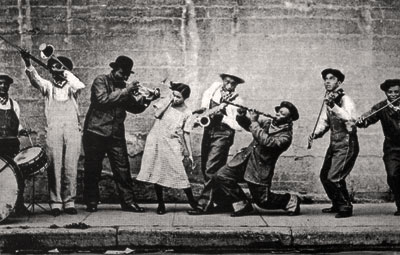 |
These characteristics have worked together in establishing an inventive style and musical genius.
II. The Feature of Jazz music --- Changeability
In jazz the skilled performer will interpret a tune in very individual ways, never playing the same composition exactly the same way twice. Depending upon the performer's mood and personal experience, interactions with fellow musicians, or even members of the audience, a jazz musician/performer may alter melodies, harmonies or time signature at will.
By the swing era, big bands were coming to rely more on arranged music: arrangements were either written or learned by ear and memorized—many early jazz performers could not read music.
[Jazz music] The progressing Jazz Styles
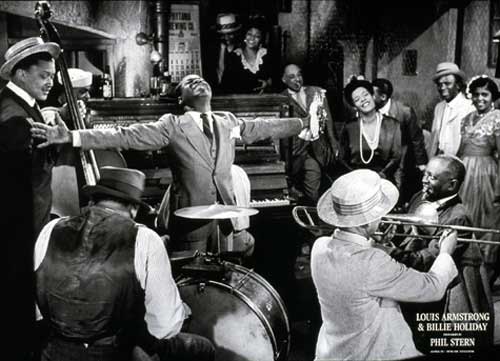 |
When asked to define jazz music, Louis Armstrong once said, “Man, if you gotta ask, you’ll never know.” Jazz music is difficult to define mainly because there are so many different styles. Oftentimes, it is also referred to as a state of mind—one that you either understand or don’t. Throughout the decades, the history of jazz music has seen a significant evolution in style and technique. |
The following is a list of these different styles:
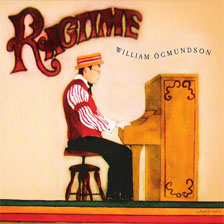
Ragtime- It is often referred to as the founding style of jazz. It originated in the southern United States during the late 1800's, and was composed primarily for the piano. Ragtime music is characterized by the vibrant and enthusiastic rhythms often associate with African dance. In 1899, pianist Scott Joplin published the first of many ragtime compositions.
The Blues– This style also had an important influence on the development of jazz. Blues songs are a part of a vocal tradition that expresses the emotions of the African Americans of the early 20th century. Usually blues vocalists sang with the instrumental accompaniment of guitar, piano, and harmonica.
Important blues musicians of the early twentieth century include Ma Rainey, Bessie Smith, and W.C. Handy.
 |
Dixieland– This is also referred to as “traditional jazz” or “New Orleans jazz”. This style was created in the early 1920s, when the traditions of blues, ragtime, and brass band were integrated into one musical piece. Common instruments in a Dixieland jazz-style group included trumpet-cornet, clarinet, trombone, and occasionally the saxophone. The rhythm section could include the banjo, piano, drums, string bass, or tuba. Dixieland was usually performed without a vocalist.
Well-known Dixieland jazz musicians include trumpeter Louis Armstrong, pianist Jelly Roll Morton, and trumpeter Bix Beiterbecke.
Big Band– This style became popular in the 1920s, following the rise of Dixieland jazz. Big band jazz was performed in an ensemble consisting of 10 or more players, using such instruments as saxophones, trumpets, piano, drums, guitar, and bass. These jazz instruments worked together to create “swing” music—a high energy style that encouraged jazz fans to dance well into the 1940s.
Popular big band jazz musicians included Duke Ellington, Benny Goodman, and Paul Whiteman.
Bebop– This style of jazz emerged in the 1940s, following the popularity of big band. Bebop was very different to the style of its predecessor, however, seeing as it consisted of a small group of players (usually 4 to 6 musicians). Bebop was characterized by complex melodies and chord progressions, and was unsuitable for dancing. It also developed a style of singing called “scat,” where nonsense syllables are sung to an improvised melody.
The development of bebop is largely attributed to trumpeter Dizzy Gillespie.
Early folk jazz - Easily described as the perfect soulful blend of African-American ragtime jazz and Anglo-American
traditional folk music. It is music that has been rarely written for profit but rather for purpose and appreciation. Free Jazz– This term was used to categorize the new direction jazz music was taking in the 1960s. Free jazz was an experimental and unique form of jazz in which pitch and tone quality were manipulated by players to produce squeaking and wailing sounds. This new form of jazz was not widely accepted by public audiences. Some of the major jazz musicians associated with this style of music were Ornette Coleman and Cecil Taylor. CAUTION: Not Widely Accepted... ---> |
