The inclination towards materialism, adherence to false values, and eventual disillusionment of America are the features standing out in the literature of the Jazz Age and can be found in many of the literary works of the time. In the following section, the three major features are elaborated with the examples drawn from the text of F. Scott Fitzgerald’s masterpiece, The Great Gatsby.
Several Crucial Facts About The Great Gatsby
parties —Adherence to false values: people’s quest for wealth —The decline of the American dream: the spirit of the 1920s | 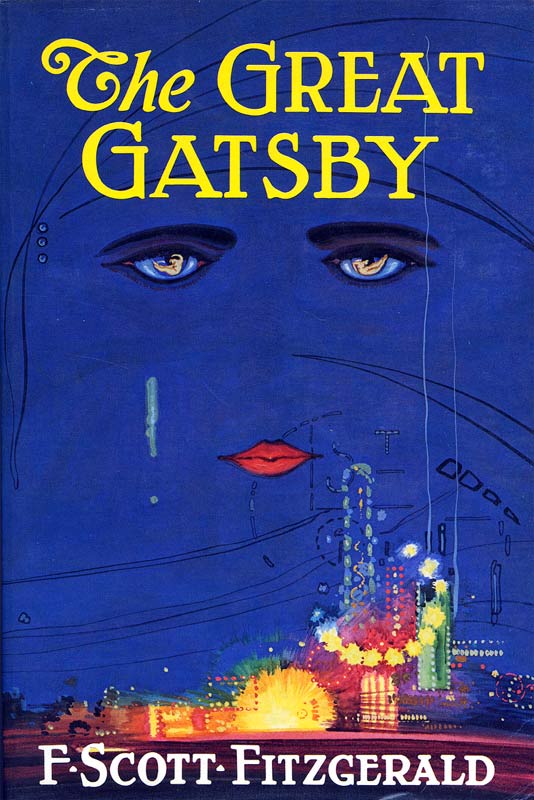 |
| w Inclination Towards MaterialismThe jazz age also refers to a growing materialism among America. After World War I and the flu epidemic, individuals were exuberant to be alive. The economic prosperity of the 1920s and the growth of the stock market influenced splurges in spending. Individuals wanted to just enjoy life after the misery of the previous decade. Money was spent on such things like the new “Model T” car, or the invention of canned food. People were more willing to spend money on vacations, and the Hamptons grew as a vacation spot for individuals in Manhattan. |
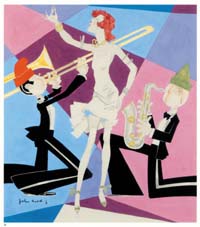
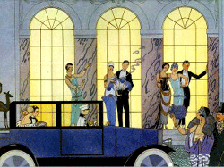
In The Great Gatsby, characters are superficial and materialistic.
w Adherence to False Values
False values and corrupted morality were present at this time. Gatsby gains fortune by illegal means and even betrays his partner.
“ [Gatsby] bought up a lot of side-street drug-stores here and in Chicago and sold grain alcohol over the counter. That’s one of his little stunts….“And you left [Wolfsheim] go to jail for a month over in New Jersey. said Tom.“He came to us dead broke. He was very glad to pick up some money, old sport.” said Gatsby. (Ch.7.)
|
|
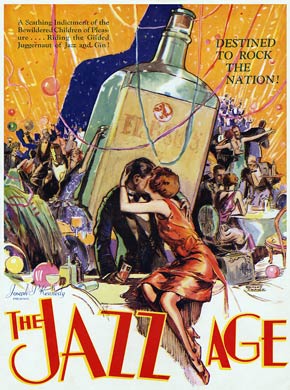
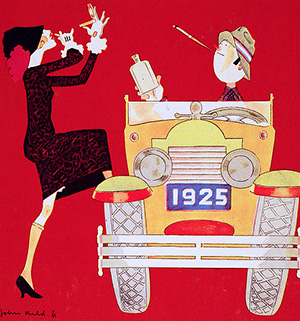
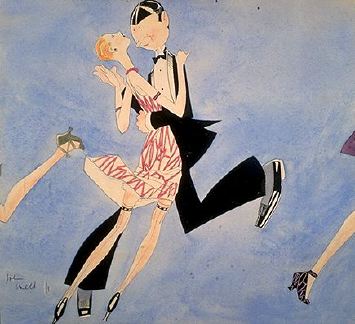
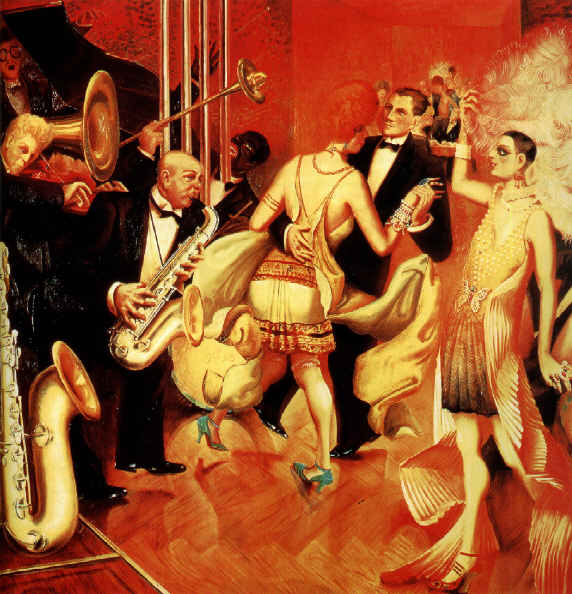
The rich possess a sense of carelessness and believe that money brings happiness.
“She [Daisy] only married you because I was poor and she was tired of waiting for me. It was a terrible mistake, but in her heart she never loved any one except me!” cried Gatsby. (Ch.7.)
I saw that what he had done was, to him, entirely justified. It was all very careless and confused. …They smashed up things and creatures and then retreated back into their money or their vast carelessness, or whatever it was that kept them together, and let other people clean up the mess they had made. . . .(Ch.9.)
w Disillusionment of America Dream
The American dream is corrupted by the failing morality of the roaring 1920s. After the glamour and sparkle and thrill fades people find themselves alone in the emptiness of a purely material universe.
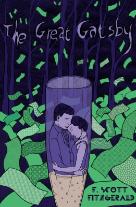 | “The minister glanced several times at his watch so I took him aside and asked him to wait half an hour. But it wasn’t any use. Nobody came.” (Ch. 9.) The American success story is that of hard work allowing a man to become incredibly wealthy. After attaining the material wealth, however, there is no clearly outlined steps to take. Fitzgerald shows how the American dream can fail in The Great Gatsby. |
Gatsby, despite his hard work, makes his money illegally by selling alcohol during an era of prohibition in America. His purpose is in attaining the love of Daisy, a girl he dated before the war, who comes from an old wealthy American family. In a way, Gatsby’s dream is not actually Daisy, but his past memory of her. His dream also mirrors that of all immigrants to America, who saw the luscious verdant green of the new land as a paradise. In a similar manner, Gatsby watches for the green light at the dock in front of Daisy’s dock. The color green symbolizes the American dream, which is corrupted by the failing morality of the roaring 1920s. [Gatsby]’s
dream
must have seemed so close that he could hardly fail to grasp it. He did not
know that it was
already behind him,
somewhere back in that vast obscurity beyond the city, ….He believed
in the green light, the orgastic
future that year by year recedes before us. |  |
References
http://answers.yourdictionary.com/entertainment-arts/what-is-the-jazz-age.html
http://www.directessays.com/viewpaper/76539.html
https://www.msu.edu/~millettf/gatsby.html
http://www.novelguide.com/thegreatgatsby/themeanalysis.html
http://www.gradesaver.com/the-great-gatsby/study-guide/about/
http://www.cliffsnotes.com/study_guide/literature/great-gatsby/about.html
http://thebestnotes.com/booknotes/Great_Gatsby/Great_Gatsby_Fitzgerald_Study_Guide26.html
http://suite101.com/article/comparing-the-jazz-age-to-the-great-gatsby-a194368
http://www.123helpme.com/view.asp?id=7878
http://www.bookrags.com/essay-2005/10/27/161918/63
http://www.sparknotes.com/lit/gatsby/facts.html
